Skilled Pathways for Advancement, Resilience, and Knowledge (SPARK)
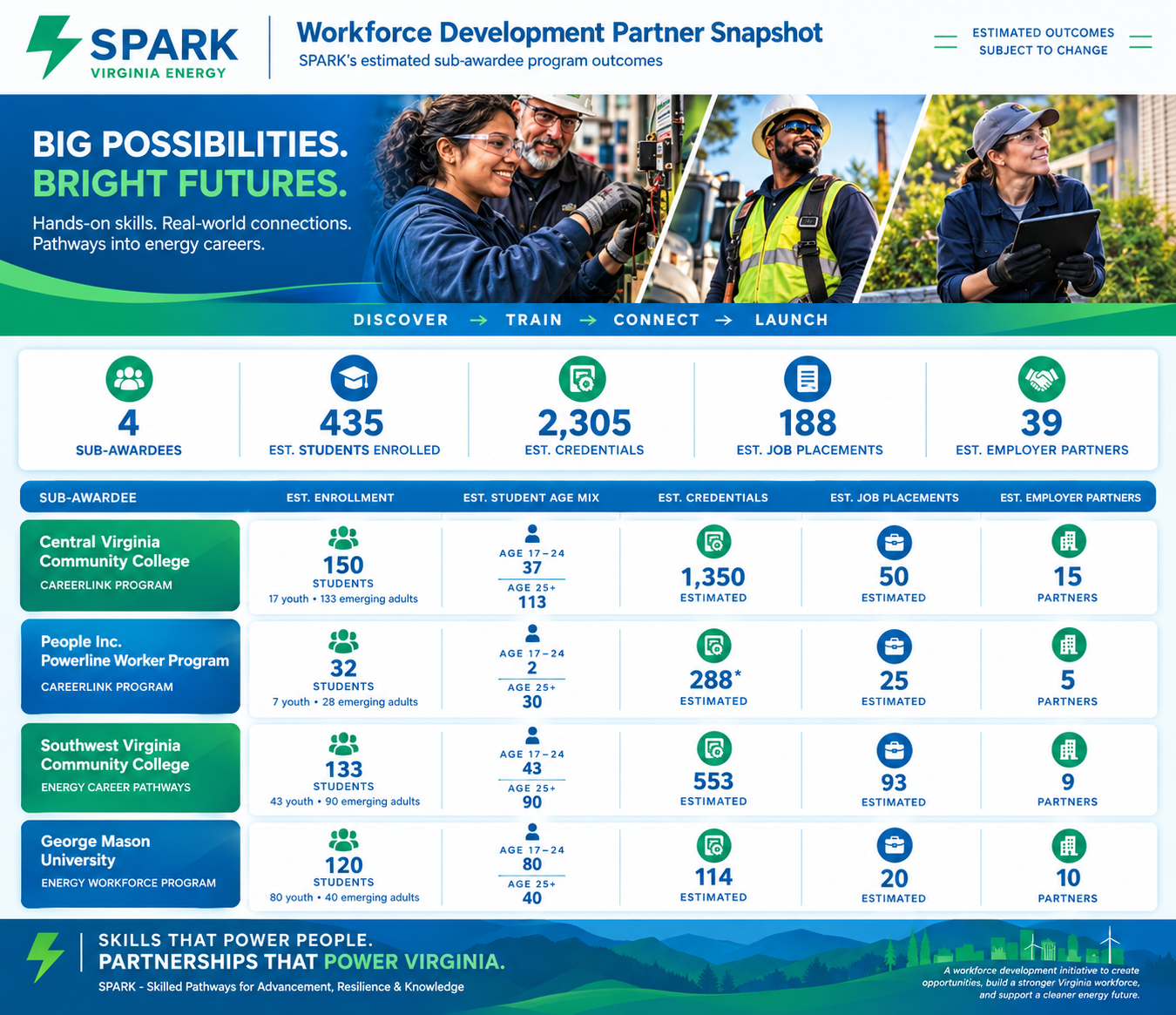
In 2025, Virginia Energy announced approximately $1.3 million in grants to support the Skilled Pathways for Advancement, Resilience, and Knowledge (SPARK) Youth Workforce Pilot Program. The funding is provided through the U.S. Department of Energy's State Energy Program under the Infrastructure Investment and Jobs Act (IIJA).
The SPARK Pilot Program initiative is designed to introduce individuals ages 14 to 25 to career opportunities across the energy sector. Through education, industry-recognized training, mentorship, and hands-on, work-based learning experiences, the program aims to build early awareness of energy careers and strengthen the Commonwealth's long-term energy workforce pipeline.
Virginia Energy received 11 proposals through the competitive application process. After review, four programs were selected for funding based on their ability to provide meaningful workforce development opportunities, establish connections to energy-sector career pathways, and help participants gain the skills, credentials, and experience needed to pursue future education and employment. Together, the four subgrantees will expand access to energy careers and support the development of a skilled, prepared workforce for Virginia's evolving energy economy.
Funded Projects
The following projects were selected to support Virginia’s energy workforce development through hands-on training, education, and career opportunities.
CareerLink for Power: Preparing Our Workforce for Energy Resilience
Central Virginia Community College
Program Focus & Target Audience
The program prepares youth ages 16–25 for high-demand careers in Electrical, HVAC, Industrial Maintenance, Mechatronics, Welding, Machine Tool, and Nuclear Technology. The program emphasizes hands-on learning and paid internships to build career-ready skills.
Geographic Coverage & Outreach Strategy
Serving Central Virginia localities, the program collaborates with Virginia Career Works to provide outreach, career coaching, tutoring, transportation, and financial assistance, ensuring equitable access across the region.

Small Modular Reactor (SMR) and Grid Operator Training Hub: Powering Virginia’s Grid and Data Center Workforce
George Mason University
Program Focus & Target Audience
The program prepares college students and emerging professionals for careers in SMR operation, grid modernization, and data center energy systems. The program emphasizes clean energy workforce development and actively engages participants from diverse backgrounds, aiming for 50% from low-income or rural areas.
Geographic Coverage & Outreach Strategy
Located in Northern Virginia, the Hub collaborates with local schools, workforce centers, and community organizations to ensure inclusive access. Outreach efforts include stipends, tutoring, life skills coaching, and trauma-informed faculty advising to promote participant success and retention.
.jpg)
SPARK Youth Workforce Development Program
People Incorporated
Program Focus & Target Audience
This program expands access to energy careers for youth ages 14–24 in Southwest Virginia, preparing them for high-demand roles in power line, HVAC, solar, and electrical trades.
Geographic Coverage & Outreach Strategy
Serving Southwest Virginia, the program partners with Wytheville, Virginia Highlands, and New River Community Colleges, engaging youth through community outreach, employer collaboration, and coordination with local workforce boards.

Developing the Next-Generation Workforce for Energy and Power in Southwest Virginia
Southwest Virginia Workforce Initiative
Program Focus & Target Audience
Based in Southwest Virginia, the initiative partners with local workforce boards, employers, and education providers to engage underrepresented youth and strengthen recruitment and support through regional collaboration.
Geographic Coverage & Outreach Strategy
Connects youth ages 14–25 to high-demand energy careers through hands-on learning, credentialed training, and earn-and-learn experiences. It serves high school students ages 14–17 and young adults ages 18–25 with tailored engagement strategies.